
The cleaning system is the core functional unit of a rice harvester, directly responsible for separating clean grains from chaff, straw, and impurities. Its working condition determines grain cleanliness, harvesting quality, and grain loss rate in field operations. Many farmers suffer invisible yield losses every harvest season due to minor cleaning system faults, such as unclean separation, excessive blown grains, and straw entrainment. Timely inspection, accurate fault diagnosis, and standardized repair of the harvester cleaning system can effectively reduce grain waste, improve harvesting efficiency, and maximize crop yield.
Most grain loss problems originate from typical cleaning system failures. The most common issue is abnormal fan wind speed and uneven air volume. Excessively strong wind blows away unthreshed rice grains, while weak wind causes poor impurity removal and accumulated chaff on the sieve surface. Another frequent fault is vibrating screen blockage and screen hole clogging caused by wet straw, mud, and crop residues. Blocked sieves fail to sift grains normally, leading to a large amount of grain remaining in the straw and discharging with waste materials. In addition, screen deformation, loose vibration bearings, and inconsistent vibration amplitude will cause material deviation and uneven feeding, further increasing field loss rates.
Scientific fault inspection helps locate hidden problems quickly. Before seasonal harvesting, operators should fully check the cleaning fan, screen frame, vibrating sieves, bearings, and transmission belts. Inspect fan blade deformation and dust accumulation to ensure stable and uniform air output. Check sieve flatness and clear all blocked screen holes. Test belt tension and bearing flexibility to guarantee stable vibration frequency. It is also necessary to observe material flow during trial operation: if chaff contains complete rice grains or the grain tank contains excessive impurities, the cleaning system parameters need immediate adjustment.
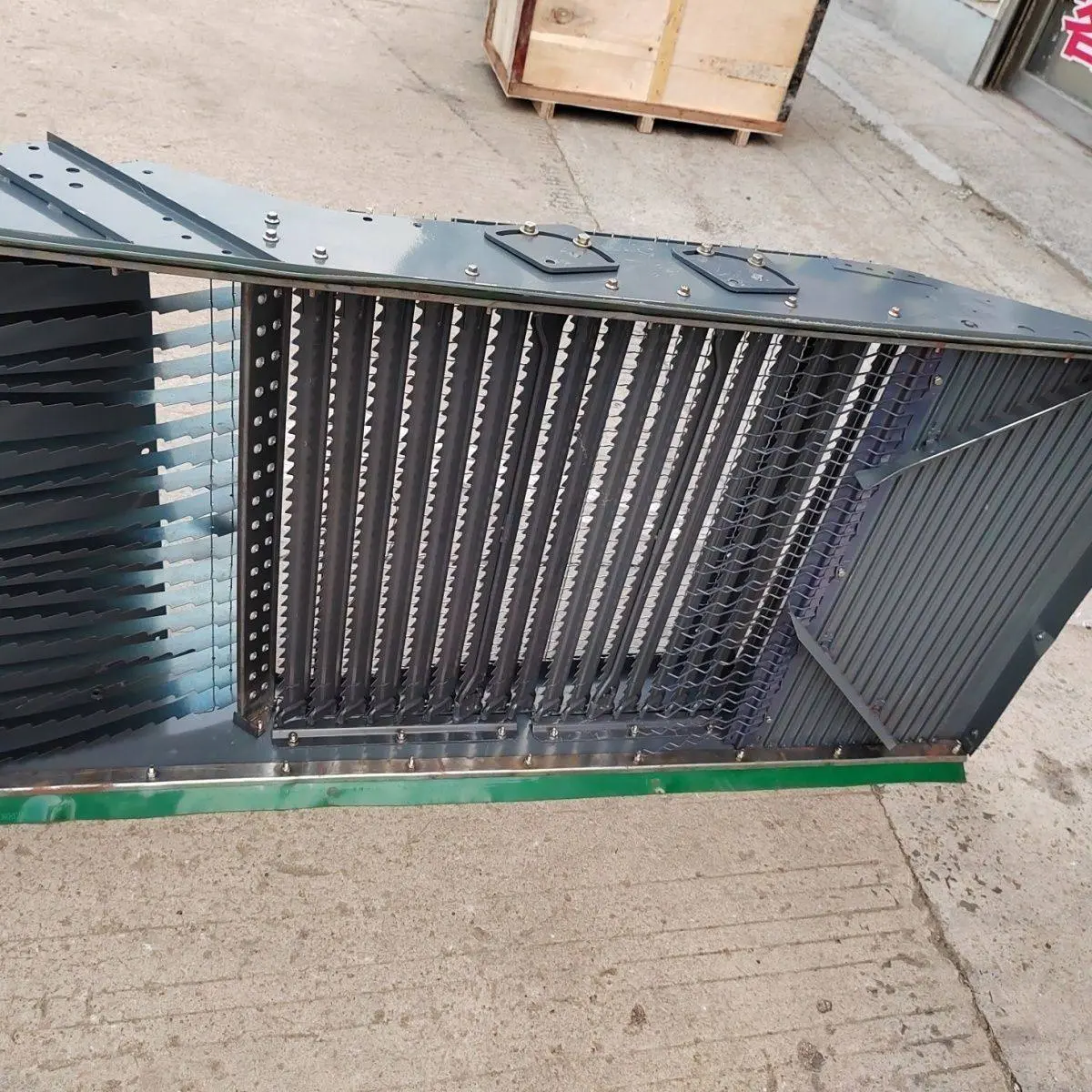
Standard repair and adjustment methods are essential to reduce grain loss. For abnormal wind volume, adjust the fan speed and air damper angle according to crop humidity and straw thickness to form a reasonable airflow layering. For blocked or deformed sieves, clean residues thoroughly and replace severely deformed screens to ensure smooth grain penetration. Replace worn and loose bearings to restore stable screen vibration. Adjust the feeding balance and vibration amplitude to avoid material accumulation and partial overload. After repair, conduct no-load and field trial tests repeatedly until grain separation reaches the optimal state.
Long-term daily maintenance keeps the cleaning system in stable condition. Clean fan blades, screens, and flow channels after each operation to prevent residual straw and mud from hardening and causing blockage. Regularly check transmission tension, lubricate moving parts, and replace aging accessories in advance. Reasonable equipment adjustment combined with standardized maintenance can effectively minimize mechanical grain loss, improve harvesting cleanliness, and bring higher economic benefits for rice harvesting operations.