
Bangladesh is an agricultural country where rice and wheat are the two staple crops feeding the majority of its population. Farming has long been dominated by labour-intensive manual harvesting, which faces severe challenges nowadays: shortage of farm workers, rising labour cost, delayed harvesting during rainy seasons, and massive grain loss during reaping, threshing and winnowing. Under such circumstances, multi-crop combine harvesters specially adapted for both wheat and rice become a game-changing solution for Bangladesh’s agriculture modernization.
This wheat & rice multi crop combine harvester is designed to fit the unique farming conditions of Bangladesh, including small and scattered farm plots, muddy paddy fields and uneven land. Different from single-crop harvesters, it can seamlessly switch between rice harvesting in wet paddies and wheat harvesting on dry land without major modification. It completes cutting, feeding, threshing, separation and grain collection in one pass, greatly shortening the whole harvesting cycle.
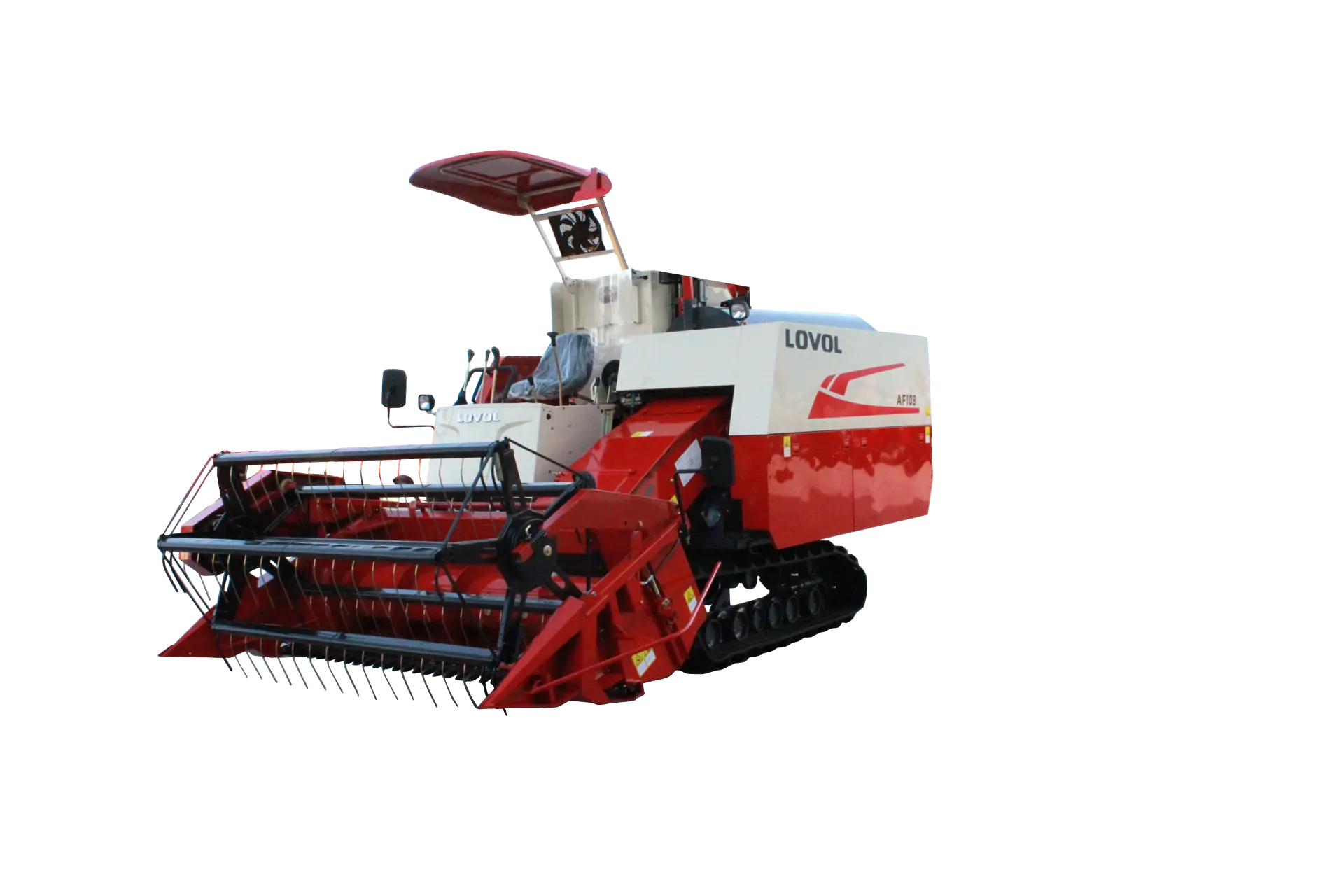
When harvesting rice, the machine adopts anti-clogging threshing structure, which can handle high-moisture paddy efficiently and reduce grain breakage. For wheat harvesting, the adjustable reel and concave clearance ensure clean threshing and minimize grain waste. The compact body makes it easy to travel on narrow country lanes and work on smallholder fields, which covers most farmland across Bangladesh.
The benefits brought by this multi-crop harvester are obvious. Firstly, it drastically cuts labour demand. Manual harvesting of one acre usually requires dozens of farmers working for days, while the combine harvester can finish the same area within several hours. It helps farmers avoid the risk of crop spoilage caused by sudden monsoon rains, a common headache in Bangladesh. Secondly, it lowers grain loss rate. Traditional manual harvesting often results in heavy grain dropping; this machine keeps loss within a low range, helping farmers retain more harvest and raise income. Thirdly, one machine serves two main crops, which effectively reduces farmers’ purchasing cost compared with buying separate rice harvester and wheat harvester.
For local agricultural dealers and smallholder farmers in Bangladesh, multi-crop harvesters also support the customised after-sales service and spare parts supply. Local maintenance teams can provide timely repair and technical training, so farmers can operate and maintain the machine confidently. As more farmers adopt mechanized harvesting, the whole agricultural industry of Bangladesh will move from traditional manual farming toward efficient, low-cost and sustainable production.
Mechanization is the future of Bangladesh agriculture. This wheat and rice dual-purpose combine harvester perfectly matches local staple crop planting structure. It solves core pain points in harvesting, improves farm productivity, cuts production costs and increases farmers’ net profit. Popularizing this kind of multi-crop harvester will continuously push forward agricultural modernization across Bangladesh, bringing tangible benefits to millions of grain farmers.